Sacred Journey
Integrated Seminar 101
Scheduled of Class Topics, Assignments
and Readings
Tentative, Subject to Change
August 25 thru September 8 - Class
Topic: Equipping Ourselves
for the Journey
(5)
-
Topics: Starting
point for your journey: re-telling your own journey.
-
The Questions:
-
A. Who are you? Where did you come from? Why are you here? Where
are you going?
-
B. What do we seek to understand? How should we approach that which
we seek to know? What should we do with that which we come to
know?
-
Huckleberrying and Sweat House
- Eye Juggling" skills, for critically interpreting religious symbols, values and scared
texts; issues of ethnocentrism and bias; an appreciation of another's point of
view, and the example of the Burnt Face
Story Text; and the difference between a theological and academic
approach to the Journey. Issues of theological/spiritual and
academic/scientific epistemologies. Nature of Religious
Stories - as "Texts": art and design, architecture, ritual behavior, narrative, speech,
song, etc.; sacred boundaries and transcendence.
The Humanities
and Social Sciences: "Sailing the Four Cs"
-
Readings:
-
Pilgrimage Edicts
Begin immediately
-
Eye
Juggling: A Methodology for Interpreting Religious Texts (ol)
Begin immediately
-
"Burnt
Face," as told by Tom Yellowtail (ol)
Begin Sept 1
-
Activity:
-
First
Reflective
Write Done during the first class session,
August 25
-
Four Orientations and
Groupings -
Align by Tuesday Sept 8
-
You
will need an Adobe Reader to access PDF printable files,

September 10 -
Common Read Discussion
and Common Read
Second Reflective Write/Essay (due Sept. 18)
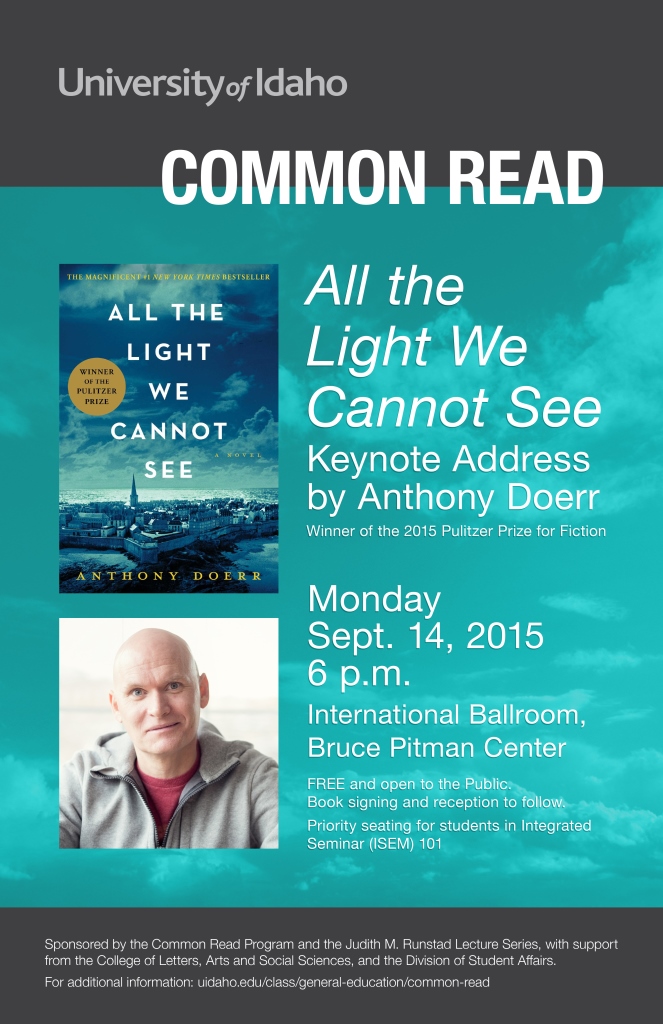
September 14 -
Common Read Keynote Address
6:00 pm International Ballroom of the Bruce Pitman Center
September 15 -
Third Reflective Write
Essay (due Oct 1.)
September 18 - Common Read Second Reflective Write/Essay due.
September
15 thru October 8 - Class Topic: The Schitsu'umsh
(the Coeur d'Alene) and the
Apsáalooke
(the Crow) and Pilgrimage
to the Mountain (8)
-
Topics: The
Texts: Oral Traditions. Creation and the Animal Peoples. The
Gifts and key religious teachings. The Spiritual Goal and Means to
reach it - rites of passage. The Sun Dance and Vision Quest.
The "wagon wheel" and the many paths to the Creator.
Medicine, its efficacy and the power of story, and its applications -
Burnt Face Revisited.
Outline of Lectures and Key
Terms
-
Readings:
-
Salmon
Always Goes Up River,
Begin
immediately
Sedna and Soul Food
and
Inuit Art,
By September 22
Dine Creation Account
and
Dine
(Navajo) Landscape and Healing
By October
1
-
Frey's
Stories That Make the World, pp. 5-37 (Introduction, "Four
Smokes" and "Couple Befriended by the Moon"), pp.
39-45, 52-61 and 63-75, (Text: Themes, Motifs, "Coyote and
Swallowing Monster" and "Coyote and the Rock"), pp.
141-158 and 162-167 (Texture, Orality and Literacy, and "Coyote and the Green
Spot"), pp. 169-177 and 179-182 (Context and "Elk and the
Young Man"), pp. 214-216 (Conclusion). Begin
immediately
-
UPDATE
Spiritual
Values of the North American Indian Begin
immediately
-
Rites of Passage (ol) and
Rites of Passage
Diagram By September
29
-
"If all these great stories were told, great stories will come!"
By
October 1
-
Schitsu’umsh
ł Sqigwts (example of current research)
By October
8
-
Video
Options:
-
The
Living Stone (32 min., this 1958 National Film Board of
Canada classic illustrates key Indigenous religious values, told in
narrative form)
-
Sun
Dance Way and Vision
Quest (57 min. and 4 min., great overview of this key
ceremony, as told by Tom Yellowtail; filmed during the June 1989, in
honor of Tom Yellowtail)
-
Billy
Yellow (18 min.,
intimate look into the Dine (Navajo) Healing Ceremony; introduced by
anthropologist David Mayberry-Lewis, as part of his Millennium
Project, 1992)
-
Oral Narratives of Lawrence Aripa
(Introduction by Cliff SiJohn, from the Lifelong Learning Online Project 2002)
-
Supplemental
Materials:
-
Nimíipuu
Landscape
-
Crow Sundance (still
images) and Tom Yellowtail
(Crow elder; background on)
-
Background
on the Schitsu'umsh and on "Heart
Knowledge" (discussion with Cliff SiJohn, Coeur d'Alene
elder, in 12 video clips)
-
Key Terms
-
Guest
Speaker:
Roger Vielle September 15
October 1 - Third Reflective Write Essay due
October 12 - Tipi Setup at 8:30 and
Take-down at 4:00 (on lawn east of Commons; depending on weather)
Indigenous People's Day (aka Columbus Day) Tipi Photo Gallery;
printable enlargements of Crow
Style Tipi
and Blackfoot
Style Tipi
·
Vandal Nation opening song (8:30 AM)
·
Sammy Matsaw, guest speaker
·
Rodney Frey, brief outline of tepee history and
set up process
·
Tepee set up by class and interested
participants.
October 12 - Study Session Monday 5-7:30 PM in the Food Court Lower Commons
Orientation
Groupings
October 13 -
First Exam - See Study Guide
October 15 - November 5 - Class Topic: Hinduism and the Pilgrimage to
Benares
(7)
-
Topics:
The Texts: the Bhagavad Gita (1)
or Bhagavad Gita (2)
(YouTube) and the Upanishads. The
Goals: The Paths of Desire - kama and artha, and the Paths
of Renunciation - dharma and moksha. The
Landscape:
divinity, the cosmos, and the self. The Process - Karma and
Samsara. The Means: Yogas - raja (way of
meditation), jnana (way of knowledge), karma (way of
action), and bhakti (way of devotion). The Gods and
Goddesses. The Pilgrimage.
-
Readings:
-
Shri Swami's Bhagavad Gita - Introductions (pp. ix-xxii), and Chapters 1 and 2
and Exercise
Begin
immediately - and Chapters 3 - 13 Begin
by October 20
-
The
Upanishads (selected writings) Begin
by October 27
-
Pilgrimage
Notes
and the Pilgrim's
Journey Diagram By October 29
-
Activity:
-
Four Orientations
- Yoga Groups
-
Video
Options:
-
Soul of a People
(29
min., a 1971 film by
Huston Smith and Elda Hartly on the central themes of Hinduism, and the paradoxes found in Indian and
in the
notion of the "Infinite Mind")
-
Hinduism: Faith, Festivals
and Rituals (50 min.,
nice overview of Hinduism and its ritual life; 1995 Films Media Group)
-
Ganges:
River to Heaven (52 min., an insightful look into Hinduism
and the role the Ganges River plays within it, full of powerful
images and authentic situations. This award-winning 2003 film
follows the journey of four families as they prepare for the death
and cremation of loved ones at Kashi, also known as Varanasi or
Benares, on the
Ganges River. It presents the rituals, realities, and
challenges associated with this key rite of passage.)
-
Benares:
Steps to Heaven (30 min., a 1984 film introducing this sacred city
of Benares, also known as Varanasi or Kashi, and the pilgrimages associated with
it.)
-
Three
Worlds of Bali (58 min.,
this 1979 film introduces to the arts and religions of Bali,
with particular reference to Wayang Shadow
Puppets and the world renewal ceremony of Eka Dasa Rudra)
-
Loving Krishna (37 min., a 1985 film about the
meaning of Bhakti devotion as expressed toward Krishna in the town
of Vishnapur in West Bengal.
-
The Lover and The Beloved: A Journey into Tantra (70
min., awarding winning 2012 film by Andy Lawrence offers one man's
journey across northern India and his search enlightenment,
searching for meaning in holy shrines, coming close to death in a
cremation grounds and enjoying the chaos of the Aghori seekers.
Offers a dramatic insight into Tankrik ideas of the life cycle,
particularly death, and how we seek knowledge in Tankrik Hinduism.
-
Supplemental
Materials:
-
Shri Swami's Bhagavad Gita - Chapters 14 - 18
-
Raja Yoga - the way
of meditation (Nadi
Pathways); Aum image and sound -
Om
Asato Ma Sad Gamaya chant (from
yogaclass.com)
- examples;
Dhrupad
Music
-
Jnana
Yoga - the way of knowledge;
Karma
Yoga - the way of action;
Bhakti
Yoga - the way of devotion, pilgrimage, and the Gods and
Goddesses
-
The Cow
-
Balinese
Time and
Balinese Arts and Dance
(and "Wayang Shadow
Puppets" YouTube)
-
Guest
Speaker:
Abhilash Reddy Maramreddy October 15
October ?? -Exercise
See Study Guide (instead of written exam;
oral presentation criteria)
October 27- Visit the Librarian, and explore
your research options for your Participatory Paper. You will not
meet in our classroom at 8:00 but
rather in the
Library Classroom, 212A. Diane Prorak,
reference librarian, will meet with us. If you have a
laptop computer, please bring it.
She will also have a sign-in sheet on which you will list some of the sources
you explored in the library workshop.
Link to
Resources.
November 3 - Proposal
due for your Personal
Quest - Participatory Paper
November 10 - Second Exam
November 12
- December 10 - Class
Topics: Islam and the Pilgrimage to Mecca
(7)
-
Topics:
Muhammad,
Ibrahim (father of the "Three"), and the Qur'an ("a Eucharist
moment," not Bible; recited and orality). Imam. Basic Theology - God-Allah, Sin
(contrast Judaism and Christianity), Atonement. The
Five Pillars of Islam.
Principles
of Islamic Art and Images of the
Mosque, Art and Calligraphy. Personal Journey - the Pilgrimage:
The Hajj and the Hajj
Stations (Nature of Pilgrimage;
Diagram of Pilgrim's
Journey) Theology: Landscape,
Goal and Means
-
Readings:
-
Abraham
- Patriarch of Monotheism
in Judaism, Christianity and Islam. Passages from
the Hebrew Bible: Genesis
12-25 (on Abraham and the Covenant)
-
Passages from the Qur'an: Begin
immediately
-
Surah 1 The
Opening
(view image illustrating the calligraphy
of the Qur'an; listen to the Qur'an)
-
Surah 16
The Bee
(on
Ibrahim); Surah 2 The
Cow
(on Ibrahim and the pilgrimage to Mecca ); additional Surahs on
Ibrahim
-
various Surahs on the
Prophets
and Jesus
-
Surah 53
The
Star
(on the divine visionary experience of Muhammad)
-
Surah 2 The
Cow
(on nature of Allah)
-
Surah 4 The Women and 17 The Night Journey (some key
Islamic
Values)
-
Surah 90 The
City
(on social justice),
-
various
Surahs on
Jihad
and war
-
"Pilgrims at Heart"
by Ebrahim
Moosa
-
On Pilgrimage
-
Videos:
-
Inside Islam
(a great introduction to Islam and its basic teachings, including
the Five Pillars. History Channel 2002)
-
Inside
Mecca (56 min., a great overview of the Hajj, from the
perspectives of three pilgrims, an Indonesia, a South African, and a
Texan, National Geographic 2003)
-
Islamic Mysticism - The Sufi Way
(25
min., an insightful introduction to Sufism. A 1971 film by
Huston Smith and Elda Hartly on Sufism)
-
Rumi: Poet of the
Heart (56 min., one of the most translated
poets, the poetry of Rumi is a wonderful introduction to the
esoteric dimensions of Islam and to Sufism. Magnolia Films 1998, 2004)
-
Cities of Light: The
Rise and Fall of Islamic Spain (a Robert Gardner 2007 film. An examination of a time
during the Middle Ages when Christians, Jews and Muslims peacefully
coexisted in southern Spain; and then what led to the disintegration of
that society. Included are reenactments, as well as a wonderful
glimpse into the region's Islamic
architecture.)
-
Isis in Afghanistan (PBS Frontline November 17, 2015; 35
min)
-
Guest Speaker:
Yousef
Bayomy
November
12
-
Supplemental
Materials:
-
Listening
to the Qur'an from the Qur'an Explorer, an
interactive audio translation.
-
Qur'an
an article by Seyyed
Hossein Nasr in the Encyclopedia Britannica Online
-
Music of
Mohammad Reza Shajarian
-
Rumi's
Words Continue to Inspire (NPR September 28, 2007 broadcast)
-
Islam and
Violence (Wikipedia)
-
Universal Islamic Declaration of Human Rights
-
Seminar Notes (part)
-
Out-of-class
Activities:
-
Moscow
Islamic Center (316 S Lilley Street, Moscow) on a
Nov 18 Arrive at 6:45 for the 7:00 pm - 8:30 pm
(for sunset prayers) - Dress modestly and
appropriately for a religious place.
November 17 - Outline
draft due for your Personal
Quest - Participatory Paper
November 23-27 -
Fall Recess - No Classes
December
11 -
Personal Quest - Participatory Paper is due
by Friday December 11th by 5:00 pm in my office Phinney 116 (I'm in the
office from 7:30 to 10:00 am and 1:30 to 3:00 pm)
December 18
- Course Evaluation is due
(can do right now!)
December 16 -
Final Exam
(PDF) -
See Study Guide Can be turned in
anytime earlier - hard copy or attached with e-mail. Due by:
December 16th Time: 9:30 am Place:
my
office, Phinney 116
[Return to top]